

Warning: Undefined variable $menuSecondaryItems in /home/dev1/www/htdocs/site/templates/views/menu-secondary.view.php on line 5
Warning: Attempt to read property "count" on null in /home/dev1/www/htdocs/site/templates/views/menu-secondary.view.php on line 5
Conference programme
Additional information: ut.ee/en/dev-conference
13:00 - 13:15
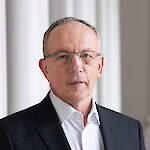
Introduction by Rector Toomas Asser
Duration: 15 min
Responsible internationalisation
- The University of Tartu, as an international university, is open to the world, while also bearing responsibility as Estonia’s national university for the development of the Estonian state and society. How can we ensure that internationalisation creates lasting added value for Estonian research, culture and the economy?
- Geopolitical changes are increasingly affecting the state of research and higher education, as well as opportunities for cooperation. How should the University of Tartu position itself in these circumstances to seize opportunities and mitigate risks?
- The principles of academic freedom, the interests of funders, and security considerations may not always align. In what ways can the University of Tartu uphold its core values when these interests conflict?
- Democracy and academic freedom are under pressure in many parts of the world. How can the University of Tartu help protect these values through international cooperation?
13:15 - 13:45
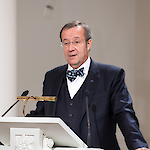
Keynote. President Toomas Hendrik Ilves
Duration: 30 min
13:45 - 13:55
UT’s perspective (strategic plan)
Duration: 10 min
13:55 - 14:35
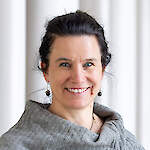
Discussion. Responsible internationalisation
Duration: 40 min
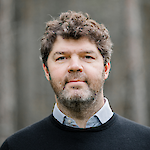
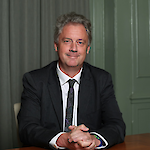
Member of the council of the University of Tartu, Professor of Monetary Economics (University of Groningen)
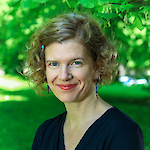

Head of the Centre for Educational Programmes at the Estonian Education and Youth Board
14:35 - 15:10
Coffee break
Duration: 35 min
Academic succession
- Estonian universities compete with the world’s top institutions for talented students. Why should a master’s graduate choose an academic career at the University of Tartu?
- For university graduates, academic careers in Estonia are just one option alongside opportunities in the private sector and foreign universities, and, after getting their doctoral degree, postdoctoral positions abroad. What conditions need to be created to encourage early-career researchers and teaching staff to pursue their academic careers in Estonia, and motivate those who have gone abroad to return, rather than accepting their permanent departure?
- Ensuring the new generation of academic staff and motivating the university community is not solely a matter of funding. The internal climate and leadership culture of the university are becoming increasingly important. How can the University of Tartu shape its organisational culture to be a competitive and internationally recognised choice for studies and career?
- The availability of future academic staff affects the entire society from healthcare and education to economic competitiveness and overall wellbeing. What role should the state and universities play in making academic careers attractive? And what role is the private sector willing to take in supporting the new generation of academic staff, not just as a beneficiary, but as a responsible partner?
15:10 - 15:40
Keynote. Kristina Kallas
Duration: 30 min
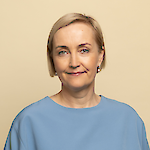
15:40 - 15:50
UT’s perspective (strategic plan)
Duration: 10 min

15:50 - 16:30
Discussion. Academic succession
Duration: 40 min
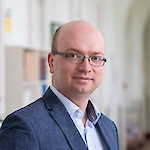
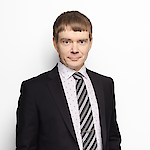

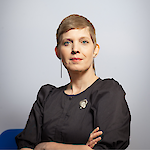
Head of the Research and Development Policy Department of the Ministry of Education and Research
16:30 - 18:00
Knowledge transfer
Duration: 90 min
- Knowledge transfer means that a researcher’s work does not end with the publication of a scientific article, but its results are reflected in products and services, in the activities of civic organisations, and in people’s everyday lives. How can we ensure knowledge transfer, and who is responsible for putting research into practice? How can we avoid situations where the researcher’s work is done and public funds have been spent, yet the results are not used in policymaking?
- Research is evolving rapidly and becoming increasingly specialised, but solving society’s major challenges requires the integration of knowledge across disciplines and the ability to apply solutions in practice. How can we encourage interdisciplinary collaboration and an entrepreneurial mindset at the University of Tartu, so that the value created through research finds its best application in both the economy and society at large?
- Research funding measures are increasingly nudging universities and the private sector towards closer cooperation. At the same time, an unstable economic environment puts companies in a situation where all their energy goes into survival rather than innovation. How can we enable and support research and development cooperation so that crises do not hinder progress but become a competitive advantage instead? How can knowledge transfer help reduce regional disparities?
- There is always a risk of failure in research, but in knowledge transfer, good ideas may also be hindered by legislation, bureaucracy, or lack of trust. What are the biggest risks associated with knowledge transfer, and how can they be mitigated to ensure society does not miss out on valuable knowledge?
16:30 - 17:00
Keynote. President Kersti Kaljulaid
Duration: 30 min

17:00 - 17:10
UT’s perspective (strategic plan)
Duration: 10 min
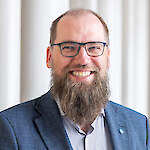
17:10 - 17:50
Discussion. Knowledge transfer
Duration: 40 min
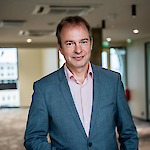
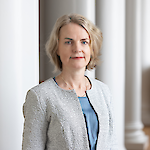
Associate Professor in Social Communication and Dean of the Faculty of Social Sciences

17:50 - 18:00
Closing words by Rector Toomas Asser
Duration: 10 min
18:00 - 20:00
An informal discussion will continue at the University of Tartu Art Museum.
Duration: 120 min
Contacts of organizer
Tartu Ülikool
E-post: kutse@ut.ee
Useful Information
Mari-Liis Pintson
Rector's Strategy Office
Communications Adviser
mari-liis.pintson@ut.ee
